Chronic pain is not the same as the pain from an injury. The injury hurts, heals, and stops. Chronic pain remains even after it can no longer tell you anything useful, and it begins to shift other things: your sleep, your movement, your willingness to do anything in a day.
People who suffer from it have tried everything that might seem obvious. Rest. Painkillers. A heat pad. Waiting. The next thing that often comes up is massage therapy, and there are many things people don’t know about what is actually happening during a massage and what it isn’t.
The short answer: Massage therapy has proven effective in the treatment of many persistent pain sufferers but is most effective when used in conjunction with other treatment methods rather than as a complete treatment. Here’s what it actually provides.
First, What Chronic Pain Does to Muscles
The body protects when something hurts for a long time. Muscles around the area get tight and remain tight. You adopt a different movement without choice, favour one side, have a high shoulder, don’t put all your weight on one foot.
That protection is reasonable for a couple of days. It will become its own problem over months. When muscles are tight, they pull on joints, limit motion and cause discomfort no matter what begins the process. Other muscles get asked to do things that they were never designed to do, and they start complaining.
That’s why old back pain is frequently accompanied by painful hips, and that’s why neck problems manifest as headaches. A good massage therapist operates on that entire pattern rather than that one spot you indicated.
It Gives Real Relief, Even When It Is Temporary
Be honest about the research first, because overselling helps nobody. Studies on massage for chronic pain are mostly small, and the quality of evidence is rated low. Reviews tend to find improvement in pain that is real but short-lived.
That sounds like a criticism. It is not. For someone who has hurt every day for two years, a few days of real relief is valuable on its own terms. It is a window where you sleep better, move more, and feel like yourself.
What matters is using that window rather than waiting for it to close. Relief spent on gentle movement and better sleep lasts longer than relief spent sitting still.
It Reduces the Guarding That Keeps You Stiff
Muscle guarding is one of the most useful things hands-on treatment addresses, because you cannot switch it off consciously.
Soft tissue work, sustained pressure and passive stretching reduce that tension directly. The joint underneath gets more room, and movement that felt blocked starts to feel available again.
Dynamic Care PT PC provides licensed massage therapy alongside physical therapy, which matters for exactly this reason. The hands-on work opens up range of motion, and the rehabilitation work then uses it. One without the other is half a treatment.
It Helps You Sleep, Which Changes Everything
Ask anyone with chronic pain what they would fix first and many say sleep before pain.
The two feed each other. Pain makes it hard to fall asleep and to stay asleep. Poor sleep lowers your tolerance for pain the next day, so the same discomfort feels worse. Round and round.
Massage therapy can interrupt that loop by reducing the tension and nervous system arousal that keep you awake. Not every study agrees, and results vary between conditions, but plenty of patients report it as the first thing that improves. Better sleep then lifts everything downstream: mood, patience, and how much movement you can tolerate.
It Calms the Stress Side of Pain
Pain is not only a tissue problem. It keeps the nervous system on alert, and that alert state increases muscle tension, shortens your fuse, and makes everything feel harder.
Hands-on treatment in a quiet room, for forty or sixty minutes, acts on that side of things. Reviews of massage in people with fibromyalgia have found improvements in anxiety and mood along with pain, which fits what patients describe: feeling less braced against the day.
Anyone who has lived with pain for years knows how much of the exhaustion is mental. Treating only the tissue misses half the problem.
It Makes the Active Treatment Possible
This is the one that people tend to miss out on and it is likely to be the largest benefit.
Most chronic musculoskeletal pain has the longest long-term record of exercises based rehabilitation. The issue is: it’s difficult to do that work well when you are in real pain and your joints feel locked. People start, hurt, and stop.
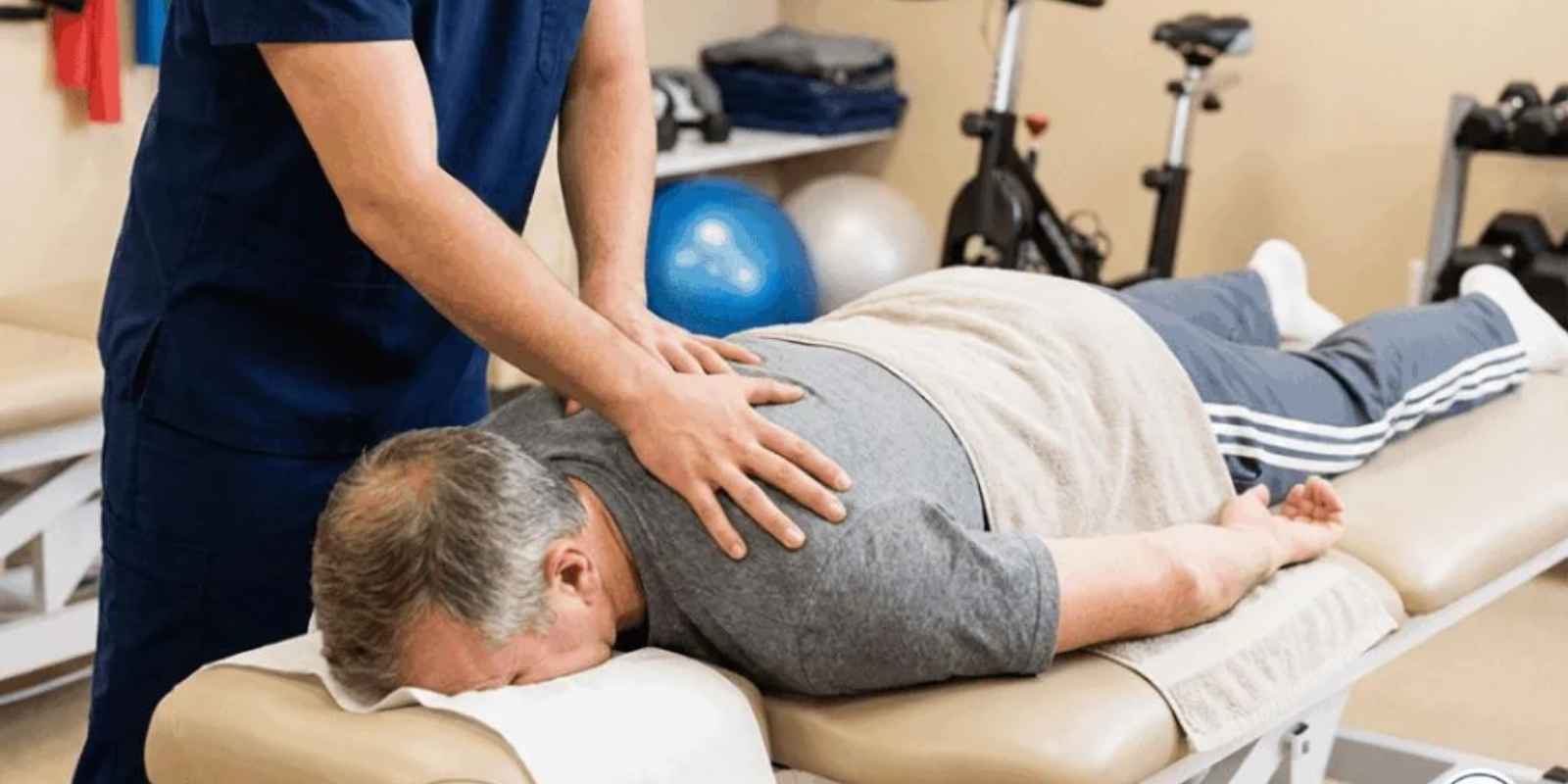
Massage therapy reduces that barrier. There is less tension and less pain so you can get into positions you can’t hold before and you can load the tissue without fighting. Massage therapy is used along with orthopedic physical therapy, pre and post operative rehab and hand therapy at Dynamic Care PT PC, and the softening and strengthening are part of the same plan.
Consider massage the means to enable exercise; exercise the means to keep progress going.
It Teaches You Something About Your Own Body
A skilled therapist discovers things that you didn’t know were there. The tight band in the hip that is associated with the back pain. The side of the neck that works all the time. Your breathing pattern for keeping your shoulders switched on, all day long.
That information is useful. If you know where your pattern is located, here’s how you can recognize it during the day and stop it: where you sit, where the screen is, which side of things you carry. Patients frequently report that the explanation was as helpful as the treatment.
What Massage Will Not Do
So, here are the boundaries.
It’s not intended to solve structural issues. Soft tissue treatment does not alleviate a problem that is related to a worn joint, a disc problem or a compressed nerve, although the muscle tenderness that surrounds the joint may be addressed.
Not a replacement for a diagnosis. If the pain is new or is following an accident or pain is accompanied by numbness or weakness or symptoms down a limb, this should be evaluated first. National health guidance on massage is explicit that the use of massage should not be a means of putting off seeing someone about a particular issue that requires attention.
It is also not permanent on its own. When working is not coupled with the pattern, the pattern tends to repeat, since the cause did not change.
How Often Is Enough?
One session is a test, but not a treatment. It indicates whether the body is responsive to hands-on work or not.
The research suggests something of value, that is, massage has been beneficial with chronic conditions when the sessions have been lengthy enough and frequent enough, spread out over a period of weeks rather than a one-off trial. In the case of fibromyalgia, reviews have shown that improvement was seen with treatment lasting at least five weeks.
Most people begin with a short, regular course, then gradually move to the more spaced out sessions as the active rehabilitation begins. A therapist should tell you approximately what to count on and when to do a reassessment instead of reserving you till the end.
Check First If Any of This Applies
Massage is generally safe, and complications are uncommon. When they have occurred, they are typically associated with vigorous methods or those who are already at risk.
Adhere to the advice of a doctor or therapist before booking if you have ever experienced blood clots, are taking blood thinners, suffer from osteoporosis, fragile bones, or are being treated for cancer, an infection, or an open wound in the area, or are pregnant. None of these will exclude massage; most simply imply a different pressure and approach. This is a conversation, not a refusal.
Always share what you’ve taken and what has been diagnosed. A therapist adapts to that and can’t adapt to what they don’t know.
The Bottom Line
When you are looking for a massage therapy professional, you should be prepared to receive the type of treatment you are looking for, as it is an important tool for chronic pain relief. It tempers the tension, provides for a brief period of pain relief, aids in sleep, calms the nervous system, and makes harder, durable work possible. It does not do what it doesn’t replace it, though.
That is the reason to keep them under the same roof. Dynamic Care PT PC provides licensed massage therapy services along with orthopedic physical therapy in both North Bergen and Guttenberg, advancing Hudson County including Hoboken, Jersey City, Union City, West New York, Secaucus, Fairview and Edgewater. Treatment begins with a thorough assessment, which means there is no speculation about what is going on when there is hands-on work involved.
That assessment is the first helpful step if pain has become a part of your routine for months. Call either office and describe what has been going on.